


Sprocket Rocket: The Gold Standard in HubSpot Theming
Posted in: Website · HubSpot · Sprocket Rocket
Posted by: Corey Smith on March 31, 2026 at 09:33 am
After building close to 300 websites by 2014, primarily in Drupal, I decided to introduce HubSpot to our agency and clients. HubSpot had already offered website-building capabilities for a number of years, but the 2013 rebrand of its website platform to the Content Optimization System introduced stronger capabilities for developers and marketers. In 2017, HubSpot’s Growth-Driven Design initiative added a more iterative way to think about websites, but the platform still needed to become easier for marketers to use day to day.
The biggest leap forward came when HubSpot added more practical drag-and-drop capabilities. That gave marketers more control over page creation while still giving developers a measure of control over the underlying environment. The ideal promise was simple: give marketers the kinds of options developers have without requiring them to understand code.
That promise is powerful, but it also creates tension. A HubSpot theme has to be flexible enough for marketers, structured enough for developers, and consistent enough that the site does not become a mess over time. That is where theme choice matters.
Sprocket Rocket has become one of my favorite HubSpot theme frameworks because it helps solve the practical problem most SMBs face: they need a website that looks good, performs well, can be edited by marketers, and does not require custom development every time a page needs to change. Sprocket Rocket is not perfect for every situation, but it is one of the strongest HubSpot theme systems I have used for balancing flexibility, consistency, and ease of use.
Three Common Problems With HubSpot Themes
The HubSpot drag-and-drop interface is impressive, but any system trying to be easy has to balance competing needs. Marketers want simplicity. Developers want control. Business owners want the site to look professional, load quickly, support SEO, and help generate leads.
What usually happens, and HubSpot is no different, is that developers with full control can accidentally introduce complications for marketers who need the system to be easy. A HubSpot module is not especially difficult for a developer to build. What is difficult is preserving the simplicity that makes the platform valuable in the first place.
Developers sometimes forget that what is easy for them is not always easy for a non-developer. A technically elegant module can still be a bad marketer experience if the controls are confusing, inconsistent, or hidden in the wrong place. That is where many HubSpot themes start to break down.
1. Controlling the Wrong Things
The first issue I see is that marketers cannot easily control the things that matter most. For example, I have seen HubSpot themes that make it unnecessarily difficult to change page width, adjust colors consistently, or manage button styles across the site. Those should be simple controls.
If I want buttons to look consistent from page to page, I should not have to edit each one manually. If I want to adjust a brand color, I should not have to hunt through individual modules and page sections. A good theme should centralize the controls that affect consistency, branding, and day-to-day editing.
2. Inconsistency From Developers
The second issue is even bigger: inconsistency from developers. One module may control spacing in one way while another module handles it completely differently. One section may let you adjust background color, while another requires a workaround. One module may be intuitive, while another creates a new learning curve for the same type of task.
This is not unique to HubSpot. I have seen the same problem in WordPress, Drupal, and custom-coded sites. Different developers prioritize different things, and those priorities show up in the editing experience.
For a marketer, inconsistency is expensive. It slows down page creation, increases mistakes, and makes the site harder to manage after launch. A theme should reduce that friction, not create a new training problem every time a module is added.
3. Themes Lack the Modules You Actually Need
The third problem is that many themes include only the modules needed for the developer’s original purpose. A theme may look great in the demo but still lack the practical modules a real business needs once the site starts growing. That forces the team to improvise, customize, or install something else.
This is where theme selection becomes more than a design decision. A theme is not just a visual starting point. It is a working system for future pages, landing pages, calls to action, content sections, conversion paths, and campaign needs.
You might find a theme with great visual design but weak module options. You might find another theme with better modules but a design system you do not like. When those pieces do not line up, the business ends up paying for the gap through custom development, inconsistent pages, or slower execution.
Why Sprocket Rocket Works Well for HubSpot Website Development
Over the last few years, I have worked with a number of HubSpot themes, both free and paid. One of the most popular options in the HubSpot ecosystem is Sprocket Rocket. Their public messaging focuses on drag-and-drop building, marketer usability, performance, and a large module library, which lines up well with the real needs I see in SMB HubSpot websites.
Even the free version gives marketers a practical starting point. The HubSpot Marketplace listing for Sprocket Rocket Free describes it as a flexible theme with ready-made templates, flexible modules, and theme settings for easier customization. That matters because a good HubSpot website should not require a developer for every ordinary page update.
Sprocket Rocket does not solve every possible theme problem, but it solves many of the common ones. It gives marketers a standard set of building blocks, creates more consistency across pages, and supports the broader promise of HubSpot as a platform that marketers can actually use. That is a big deal.
In my opinion, Sprocket Rocket is one of the strongest standards for theme building in HubSpot. You can use it as a basis for creating new modules, extend it for custom needs, or simply use the available modules to build pages faster. It gives the site a stronger foundation than starting from a bare theme or a collection of disconnected custom modules.
What Sprocket Rocket Helps Marketers Control
The biggest strength of Sprocket Rocket is that it gives marketers practical control without asking them to become developers. That is the line every HubSpot theme should try to walk. Marketers need flexibility, but not so much freedom that they accidentally break consistency, performance, or brand standards.
Sprocket Rocket’s own documentation highlights theme settings for fonts, colors, and spacing that apply across the website. That kind of centralized control is exactly what many HubSpot themes get wrong. If brand colors, typography, and spacing rules are handled consistently, the site becomes easier to maintain and easier to scale.
The other advantage is module availability. Sprocket Rocket’s current materials describe a large design system with 150+ modules through its broader app experience, while the HubSpot Marketplace listing for Sprocket Rocket Core describes 37 pre-built modules and 18 templates, plus access to additional modules through the app. The exact number depends on the version and setup, but the important point is that Sprocket Rocket gives marketers a deeper toolbox than many standard themes.
That matters because real websites evolve. A business may start with a homepage, services page, about page, and contact page, then later need case studies, landing pages, comparison pages, FAQ sections, testimonial sections, resource pages, and campaign pages. A theme that supports those needs from the beginning is usually easier to grow.
Sprocket Rocket Is Still a Framework, Not a Strategy
Sprocket Rocket makes a lot of HubSpot website work easier, but it does not replace strategy. This is an important distinction. A good theme can help you build faster, but it cannot decide your message, offer, audience, conversion path, or content structure for you.
This is where I connect Sprocket Rocket back to broader HubSpot consulting. The platform and theme matter, but the business still needs to make strategic decisions about how the site should support sales, marketing, reporting, SEO, and lead generation. If those decisions are weak, the best theme in the world will only help you build the wrong thing faster.
I made a similar point in my WordPress vs HubSpot comparison. The right platform depends on your goals, team, resources, and expectations. Sprocket Rocket can make HubSpot website development easier, but it is still only one part of the larger website strategy.
That is also why performance still matters. A theme can be well-built and still be weighed down by too many scripts, images, embeds, animations, or third-party tools. I have written more about HubSpot website performance and build-quality trade-offs, and the same principle applies here. A good framework helps, but good decisions still matter.
Two Sprocket Rocket Website Examples
I will share two examples of websites I have built using Sprocket Rocket. These are not meant to be massive enterprise examples. They are practical SMB examples, which is exactly why they are useful. Most businesses do not need unnecessary complexity; they need a clean, manageable website that supports real marketing needs.
Louder Confidence
Louder Confidence was the first site where I used Sprocket Rocket. I had built quite a few HubSpot sites using a variety of other Marketplace themes, and I had also tried some ThemeForest-style approaches that I do not recommend. This site was a practical first test of how Sprocket Rocket could support a simple business website.
There are a fair number of customizations on the site, though most visitors probably would not notice them... that's a good thing. The goal was not to make the site feel overbuilt. It was to create a clean implementation for a small company using HubSpot Content Hub Starter.

Take a peek at the Louder Confidence website.
Image Systems
Image Systems, also known as ISBS, is another example of a simple small business website built on HubSpot with Sprocket Rocket. They have been in business for more than 20 years, but we are just starting to build out their marketing foundation. That makes flexibility important.
Sprocket Rocket gives us room to organize the site now while keeping future growth in mind. They are using HubSpot Content Hub Starter today, but the site has room to scale as their marketing goals become more advanced. That is one of the reasons I like the framework for SMBs that need something practical now and more capable later.
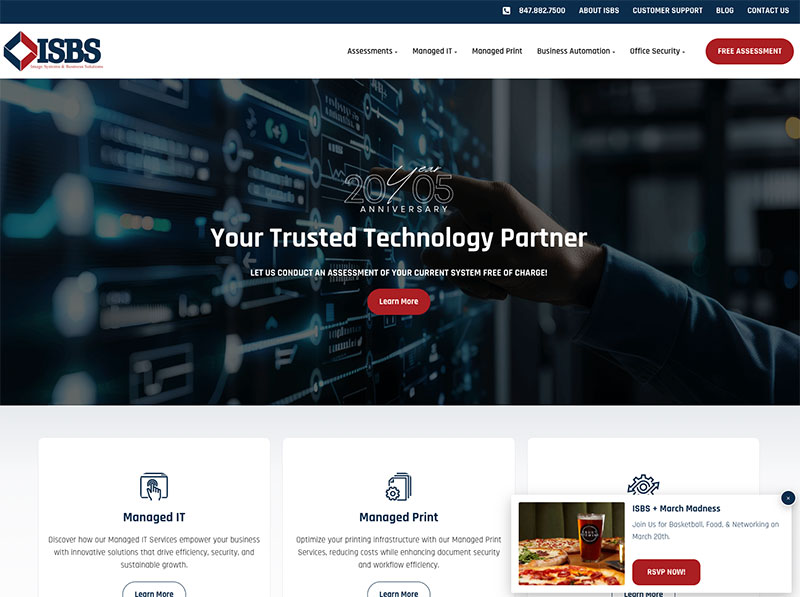
Take a peek at the Image Systems website.
When Sprocket Rocket Is a Strong Fit
Sprocket Rocket is a strong fit when a business wants to build and manage a HubSpot website without turning every page update into a development request. It is especially helpful for SMBs that need flexibility, but still want structure. That balance is harder to achieve than most people think.
It is also a strong fit when the business already uses HubSpot or plans to use HubSpot more seriously. If your website, forms, landing pages, CRM, reporting, and marketing activity are all connected, then building the site inside HubSpot can reduce friction. Sprocket Rocket helps make that website-building layer more practical.
It may not be the right fit if you need a highly unusual technical build, deep custom application logic, or a design system that cannot work within HubSpot’s theme and module model. In those cases, custom web development may be the better conversation. The point is not to force every site into Sprocket Rocket. The point is to use the right foundation for the job.
For many HubSpot-based SMB websites, though, Sprocket Rocket gives you a better starting point than building from scratch or relying on a thin theme with too few modules. It provides structure without taking away too much flexibility. That is the sweet spot.
Is Sprocket Rocket Right for You?
I cannot answer that fully without understanding your goals, team, website needs, and HubSpot setup. But if I were betting on a HubSpot theme framework for many SMB websites, Sprocket Rocket would be near the top of the list. I use it on my own website, and I like it because it supports both simple pages and more advanced needs.
The free version may be enough for some businesses. The Core and Pro options add more capabilities depending on how much flexibility, module depth, and design control you need. The right choice depends on the kind of site you are building and how much you expect it to grow.
If you already have Sprocket Rocket installed, the next step is not just choosing modules. The next step is setting the theme up correctly, standardizing how pages should be built, and making sure marketers know how to use the system without creating inconsistency. If you happen to be using my Sprocket Rocket modules, you might be interested in the full Smithworks Sprocket Rocket documentation.
I said above that I think Sprocket Rocket is one of the strongest standards in HubSpot theming. I still do. If you are trying to decide whether HubSpot, Sprocket Rocket, or a more custom approach makes the most sense for your website, start with the business goal first. Then choose the platform and theme that make that goal easier to execute.
Frequently Asked Questions About Sprocket Rocket and HubSpot Themes
Sprocket Rocket raises practical questions because it sits between theme selection, HubSpot implementation, marketer usability, and website strategy. These answers are meant to help business owners and marketers understand when Sprocket Rocket is a strong fit and when a different approach may be needed.
Is Sprocket Rocket only for developers?
No, Sprocket Rocket is not only for developers. One of its biggest strengths is that it gives marketers a practical way to build and manage HubSpot pages without needing to write code. Developers may still be useful for setup, customization, and advanced needs, but the day-to-day editing experience is built to be marketer-friendly.
Related Posts: What Skills Do You Need to Build a Website? · Technology Doesn't Matter · Elements of an Inbound Marketing Campaign
Should I use Sprocket Rocket or build a custom HubSpot theme?
Neither option is automatically better. Compare the decision against the way your team needs to build and manage the site:
- Time: A framework can shorten the path to launch; a custom theme usually needs more discovery and development.
- Marketer control: Decide how much control marketers need without developer help.
- Design: Confirm whether the brand fits a flexible visual system or requires a highly custom design.
- Integrations: Document any unusual data, application, or workflow requirements before choosing.
- Maintenance: Decide who will support the theme and make future changes.
- Budget: Compare licensing, implementation, support, and future development—not just the initial build.
Choose the option that meets those requirements without creating complexity your team does not need. The Sprocket Rocket overview provides more context for evaluating the framework.
Related Posts: WordPress vs HubSpot: What's Best for your website? · How Long Does It Take To Build a Website? · 6 Questions to Ask Before Any Web Development Project
Can Sprocket Rocket support a full business website?
Yes, Sprocket Rocket can support many full business websites, including home, service, about, contact, landing, and blog pages. It is a strong fit when the available modules and theme settings can support your content, brand, visitor paths, and expected growth. You may need additional apps or custom development when the site requires unusual interactive features, specialized data, complex connections to other systems, or a visual system the theme cannot reproduce cleanly. Review the current Sprocket Rocket documentation before deciding whether the standard capabilities cover your requirements.
Related Posts: What Skills Do You Need to Build a Website? · How Long Does It Take To Build a Website? · 6 Questions to Ask Before Any Web Development Project
Does Sprocket Rocket solve HubSpot performance problems?
Sprocket Rocket can help provide a cleaner and more structured starting point, but no theme automatically solves every performance issue. Performance still depends on image choices, scripts, embedded tools, tracking, animations, module usage, and overall page build quality. A good theme helps, but the decisions made inside the theme still matter.
Related Posts: Why Website Performance Metrics Don’t Tell the Whole Story · WordPress Thinking Creates Bad Websites · 10 Ways to Improve Your Website Performance
Is Sprocket Rocket a good fit for HubSpot Content Hub Starter?
Sprocket Rocket can be a practical fit for Content Hub Starter when you want reusable page-building tools instead of starting with a blank theme. Its current plans range from a free option to larger one-time-purchase packages, so compare the modules and templates in the specific package you are considering. Content Hub Starter includes up to 30 landing pages, while HubDB-powered dynamic pages require Content Hub Professional or Enterprise. Before you commit, confirm your page count, required templates and modules, system-page needs, and whether any content must be generated from HubDB.
Related Posts: WordPress vs HubSpot: What's Best for your website? · Elements of an Inbound Marketing Campaign · Technology Doesn't Matter
Ready to Make HubSpot Easier to Manage?
A HubSpot website should not feel like a fragile collection of disconnected modules. It should give your team enough structure to stay consistent and enough flexibility to keep moving. That is why theme choice matters so much.
Sprocket Rocket is not the only good HubSpot theme option, but it is one of the strongest I have used for SMB websites that need practical control without unnecessary complexity. If you are not sure whether your HubSpot website needs a theme cleanup, a Sprocket Rocket setup, or a more custom approach, that is a strategic question before it is a technical one.
If you want help thinking through the right approach, contact me here and we can look at what your HubSpot website actually needs.

About Corey Smith
Ready to simplify and succeed? Let’s make it happen—because your business deserves practical, no-nonsense wins. Find me on LinkedIn.